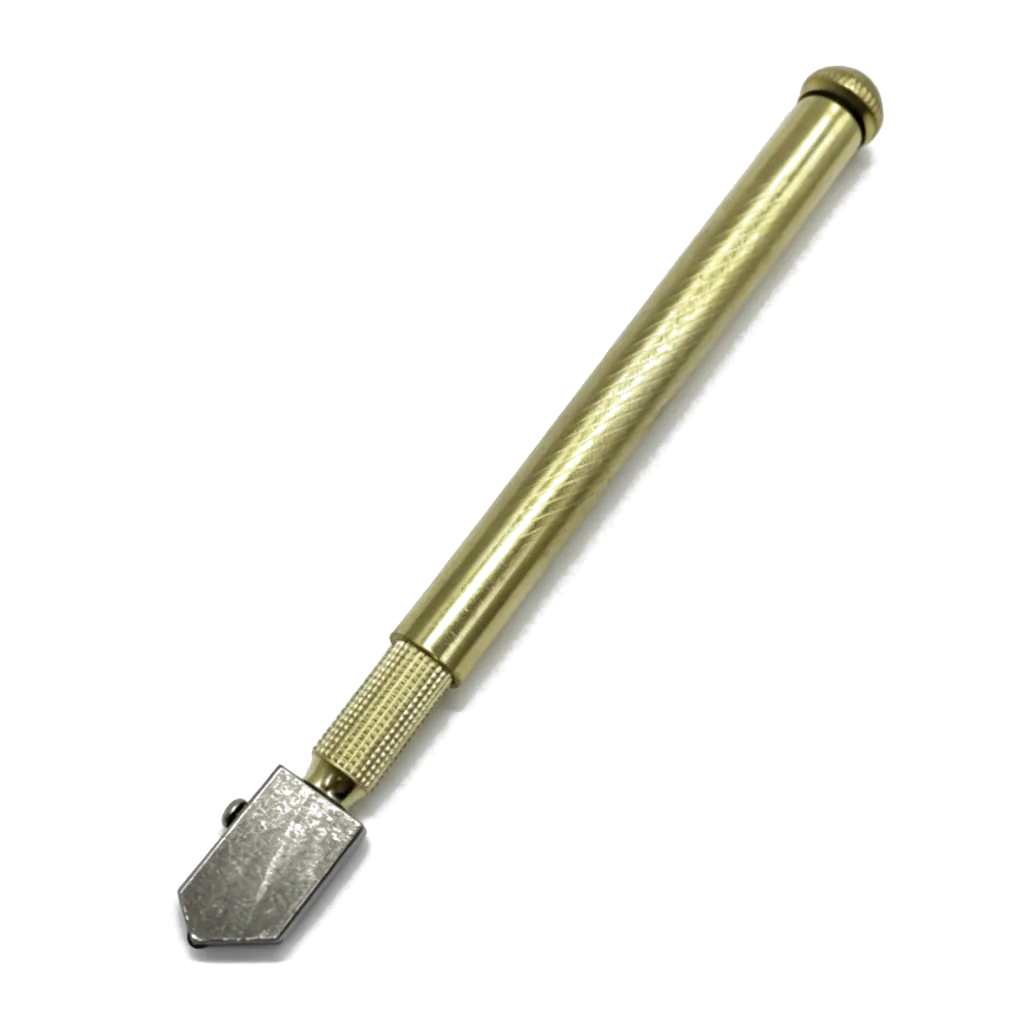
Carbide Wheel, Self-Oiling Body
The cutting wheel is carbide, and that is the specification that matters. A carbide wheel scores glass with a cleaner groove and holds its edge far longer than an alloy wheel, which goes blunt and starts to chatter along the score line — the difference between a snap that runs straight and one that wanders. Diamond wheels sit one step above carbide for high-volume workshops: same principle, longer life, higher price, and a harder sell at the counter.
The body is self-oiling — the handle reservoir holds kerosene or cutting oil and feeds the wheel as you score, keeping the line lubricated so the glass snaps clean instead of chipping along the edge. A metal tapping ball at the tail does the other half of the job: score, tap, and the break runs true. The body is steel with a plastic handle, 182MM overall for one-hand use. There is nothing to adjust and nothing to maintain: the cutter is a consumable, and the honest way to sell it is on how many clean scores a wheel gives before it is replaced.
Three Thickness Ranges
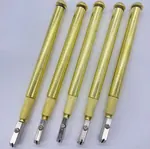
Export demand splits into three wheel ranges, each matched to the glass it is sold against: 2–6MM for thin glass and mirror work, 3–12MM as the general-purpose model that ships most, and 6–15MM for thick glass where a deeper, heavier score is needed. The 182MM body sits at the long end of the standard 170–180MM handle range — extra leverage matters on the thicker sizes.
One limit matters more than any spec on the sheet: a wheel cutter scores annealed float glass, mirror and thin tile. It cannot cut tempered glass — the score line makes it shatter into cubes. Buyers who need tempered panels cut to size have to cut before tempering, and saying so in the listing saves a refund.
Where Glass Cutters Are Used
Glaziers and mirror shops are the core trade: cutting mirror and float glass to size on the bench or on site. Renovation crews carry one for on-site adjustments, and thin ceramic tile scores with the same wheel. Picture framers use the cutter for glass and mount board, and the hobby channel — stained glass and terrarium work — buys it in small quantities through craft supply.
- Glaziers & mirror shops — cutting float glass and mirror to size
- Picture framing — glass and mount board cutting
- Hobby & craft — stained glass and small project work
- Tile & finishing — thin ceramic tile scoring
- Hardware retail — sold as a counter consumable
Packing & Program Notes
Retail packing runs three ways: single piece on a blister card, in a clear plastic tube, or in a color box. For export, pieces go 10 to an inner box and 100 or 200 to an outer carton — the 200-piece count keeps unit cost low enough for the counter channel, where the cutter sells as an impulse or emergency purchase.
MOQ is 10 cartons per SKU. Custom packing, color box and logo printing are available from 50+ cartons for buyers with their own glazing, tile or craft brand.
Glass Cutter — FAQ
What size is the cutter?
182MM.
What is the cutting wheel made of?
Carbide, in a steel body.
What is the handle material?
Plastic.
What is the MOQ?
MOQ is 10 cartons per SKU, with custom packing and logo from 50+ cartons.
What glass thickness can it cut?
Three wheel ranges cover 2–6MM, 3–12MM and 6–15MM. The 3–12MM range is the general-purpose model that ships most.
Can it cut tempered glass?
No. A wheel cutter scores annealed float glass, mirror and thin tile. Tempered glass shatters along the score line, so panels must be cut to size before tempering.